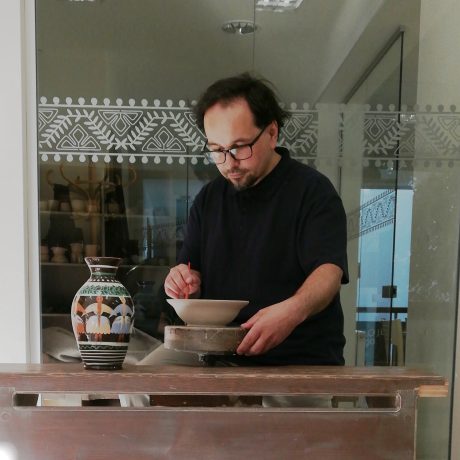
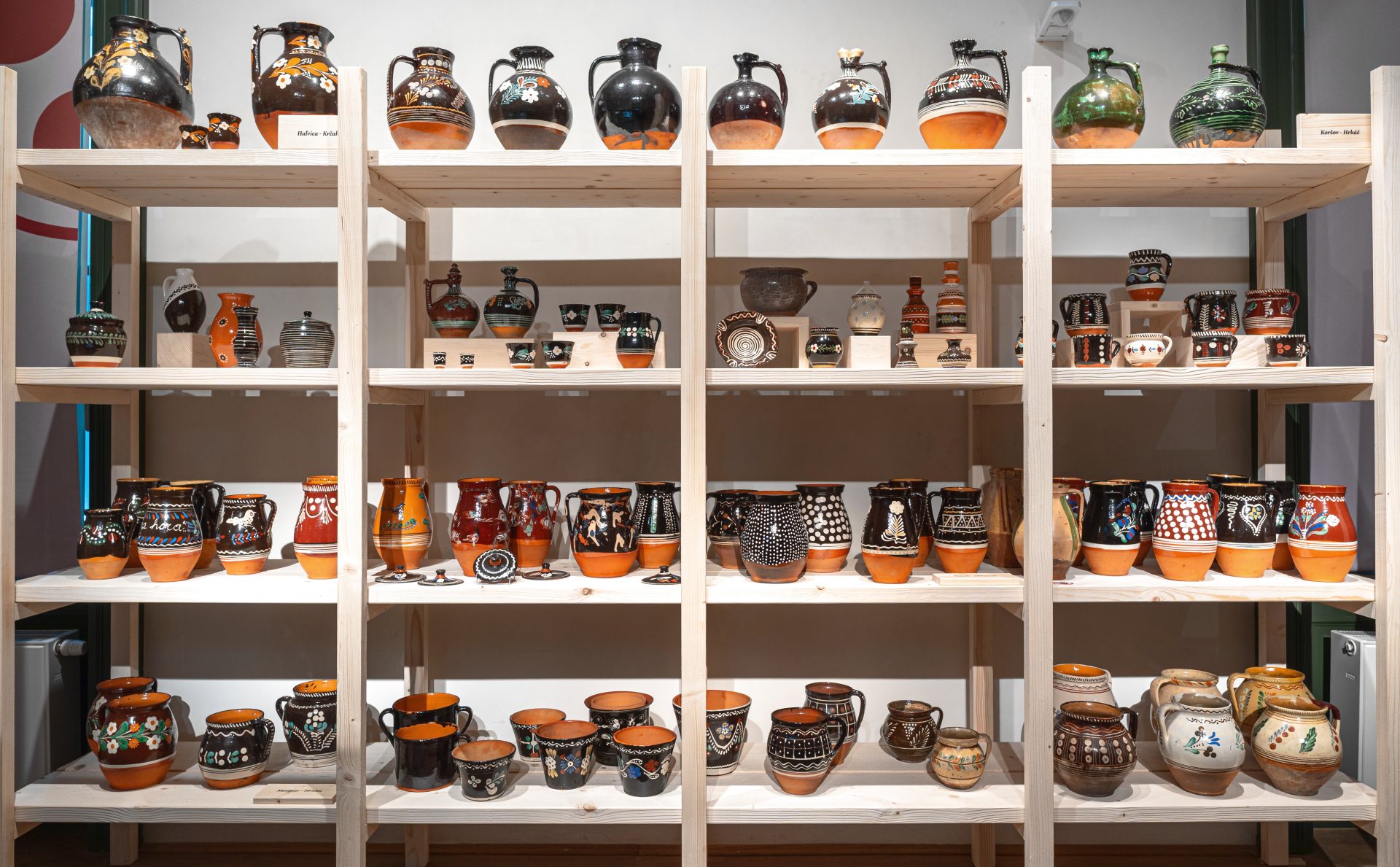
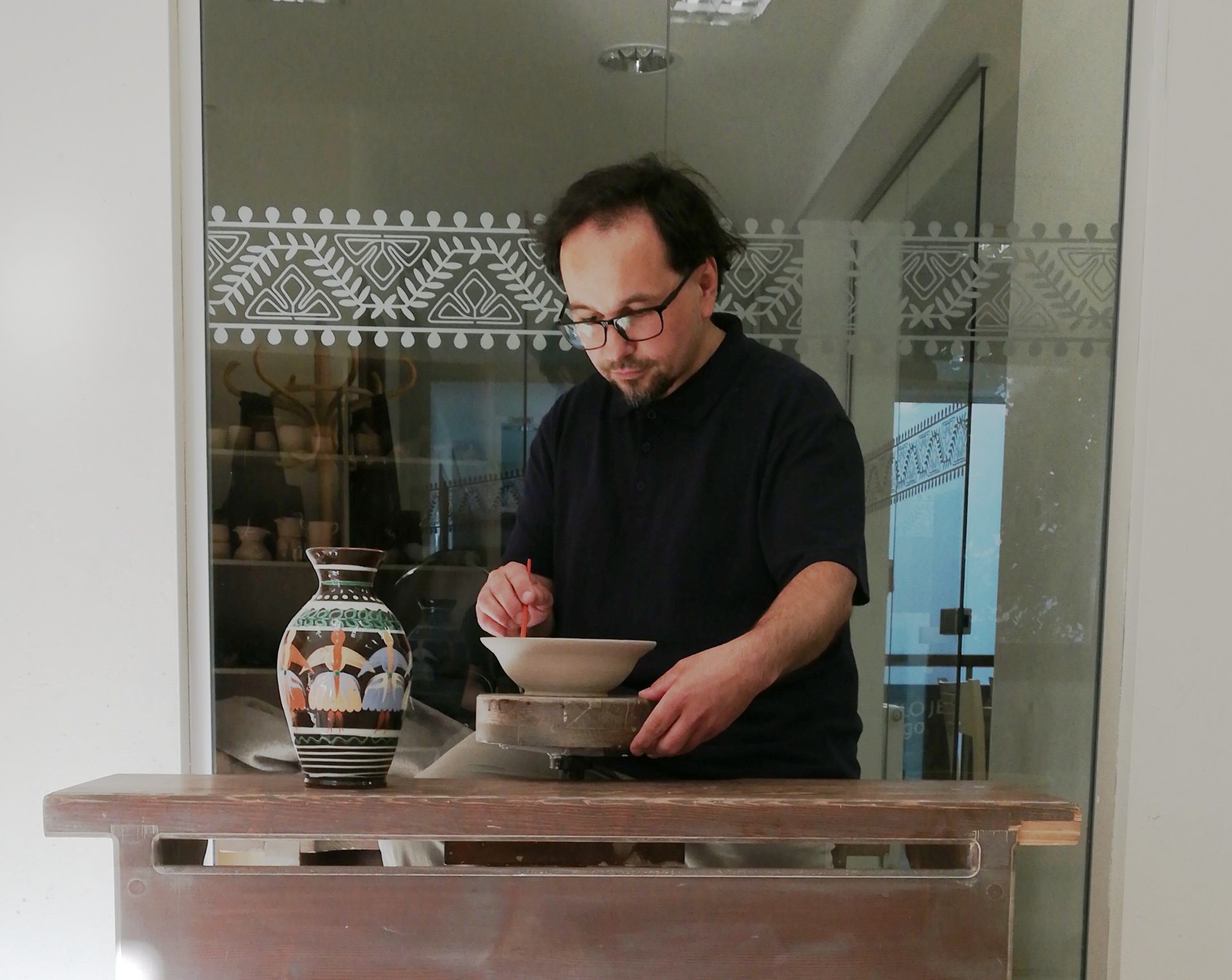
The pottery craft in Pozdišovce (Michalovce district) is based on a local tradition of ceramic production that spans more than 600 years and developed in a rural environment. The earliest mention of local pottery dates back to 1416. In the 18th century, potters from Pozdišovce established a guild. In 1947, the Centre for Folk Art Production (ÚĽUV) founded a pottery cooperative here, which has influenced both the form of production and its artistic expression up to the present day. The Pozdišovce workshop became one of the largest pottery centres in Czechoslovakia, with dozens of master potters continuing traditional production. Among the current generation of local potters, Ján Parikrupa carries on a multi-generational family tradition. This tradition is also followed by ceramists Ľubomír Lipai, Jana Lipaiová, and Ján Mokriš.
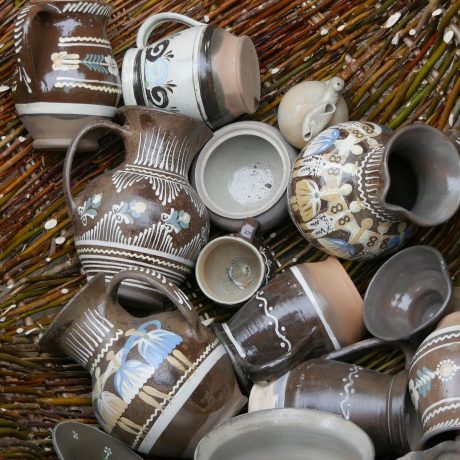
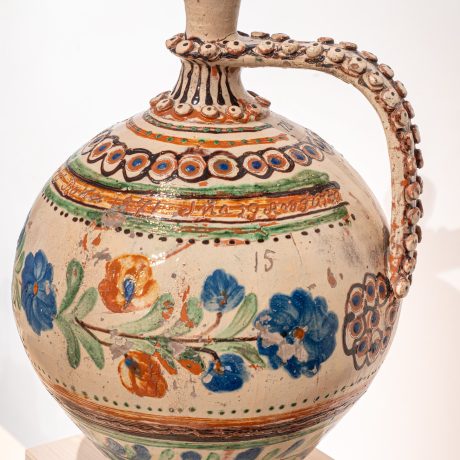
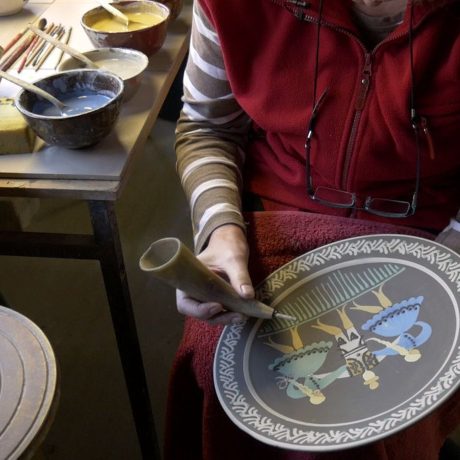
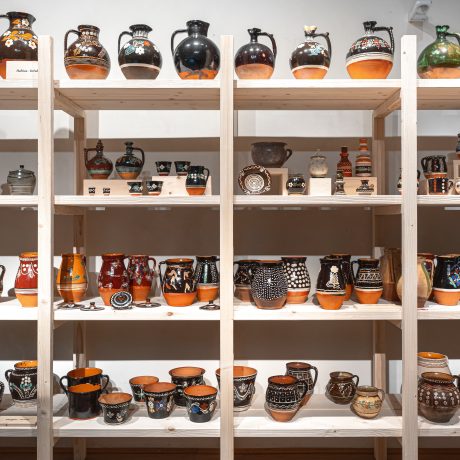
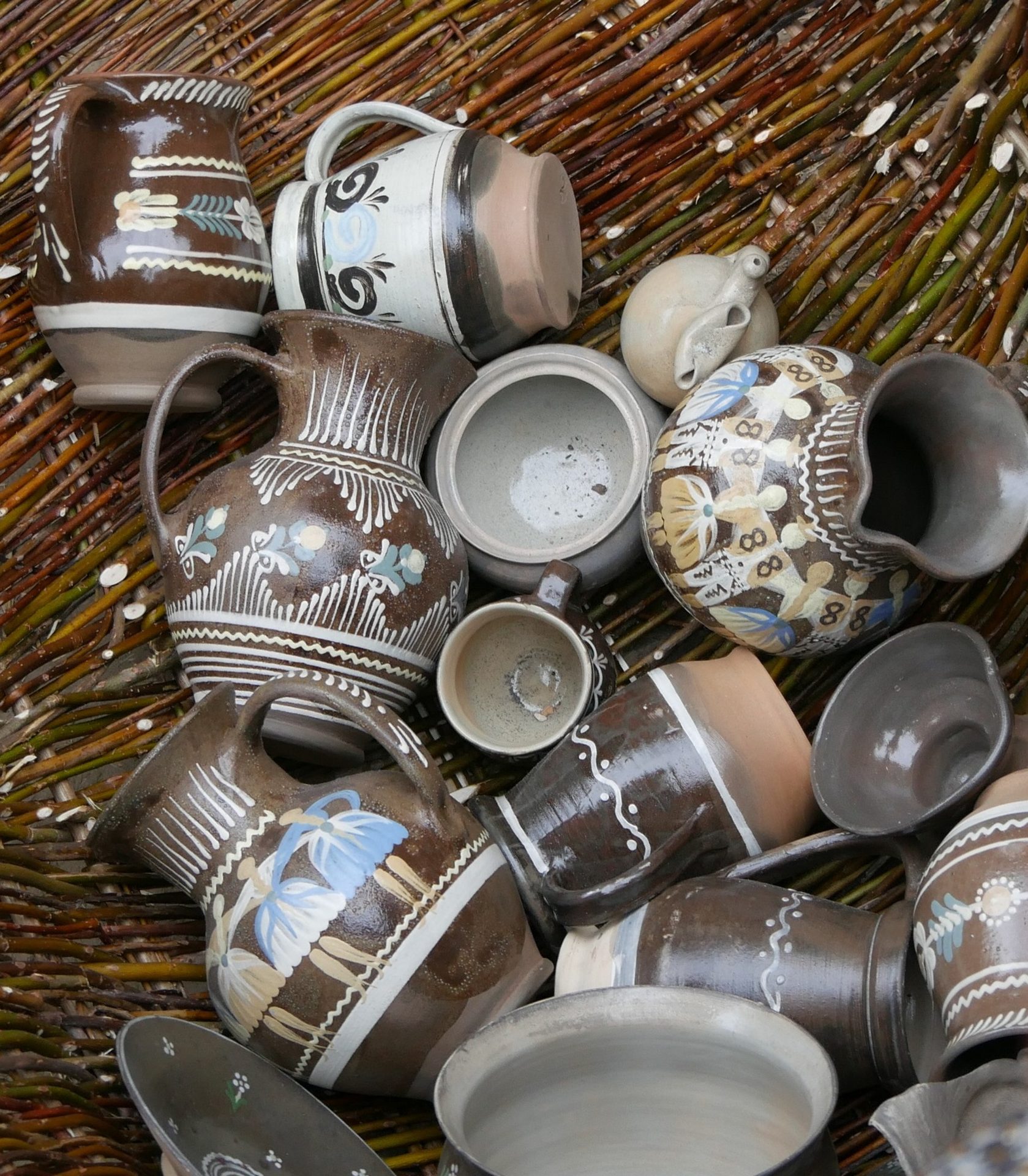
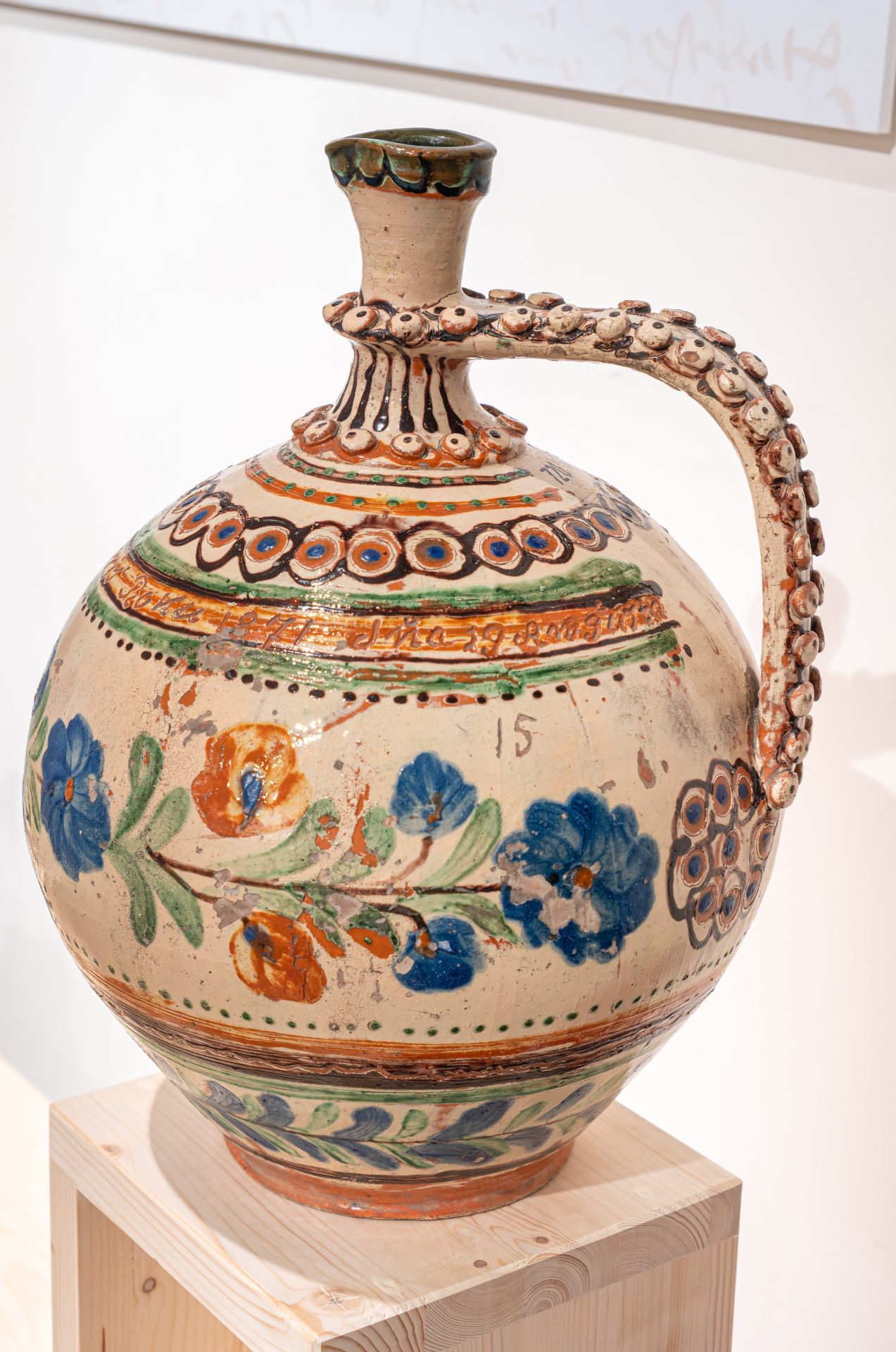
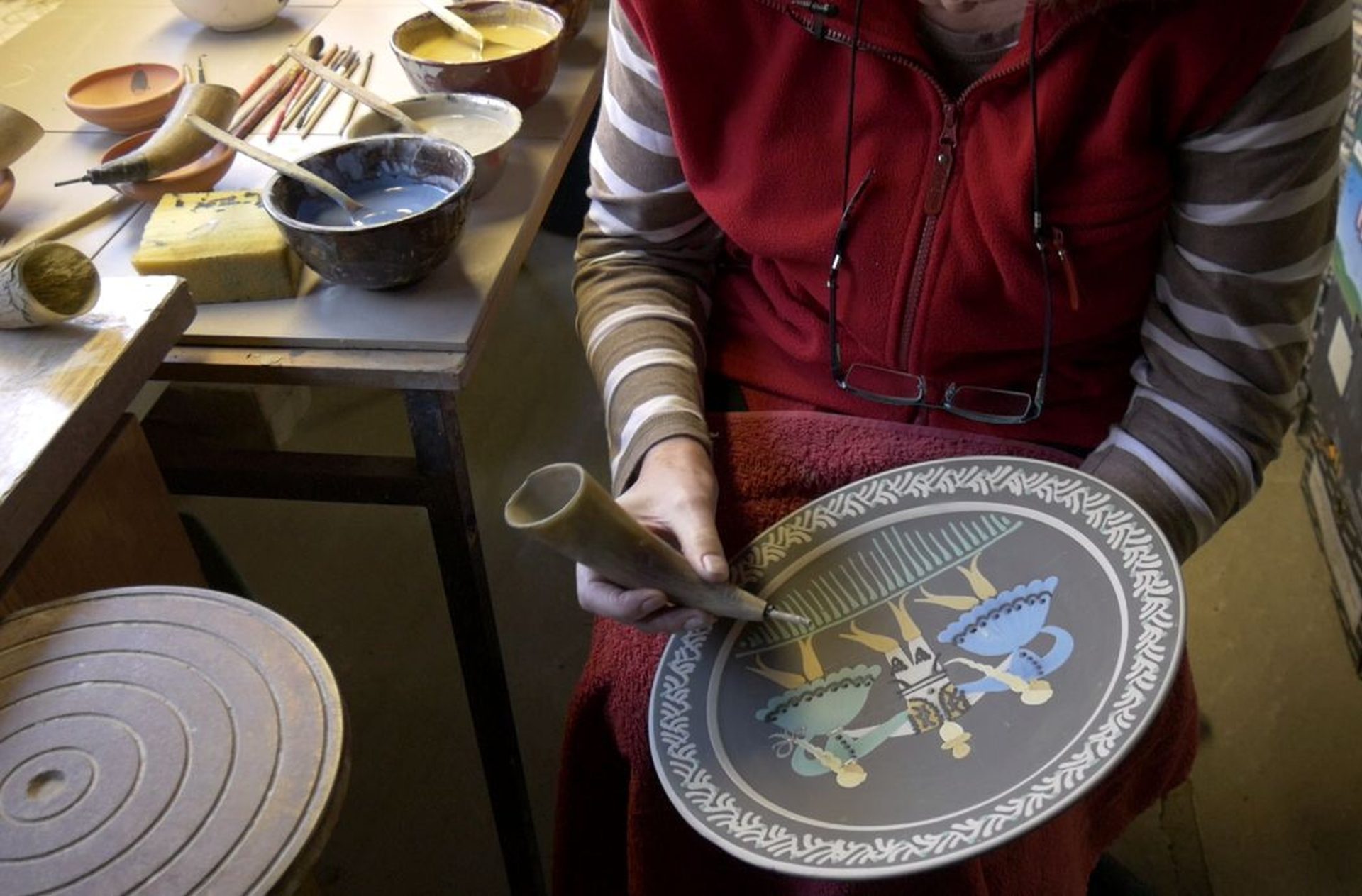
Pottery from Pozdišovce is primarily based on the production of functional household ware. Decorative ceramics later developed from this foundation. Production relies on pottery clays found in the Zemplín region, occurring in various forms. The shapes of Pozdišovce ceramics are created on a potter’s wheel and may be complemented by applied plastic elements, with smooth curves predominating. The ceramic body features a colour palette ranging from white to brick red. A base slip is applied to the formed vessel, with shades varying from white through yellowish-brown to black. Underglaze painting uses earth pigments, engobes, and dyes in white, red, yellow, brown, beige, orange, black, green, and blue. These are applied using a brush or a modified cow horn (locally known as a “rožok”) fitted with a quill. After bisque firing, the decorated pieces are coated with a transparent glaze.
Common geometric decorations include lines, spirals, wavelets, arcs, dots, and grids. Plant motifs often feature a spruce (“smrečok”), as well as wreaths, flowers, and bouquets (“venčik”). The main zoomorphic motif is a bird. Particularly iconic, however, is the figural ornament inspired by the circular dance known as “karička”. The Pozdišovce tradition also includes blackware (smothered pottery), characterised by a grey to black surface with burnished decoration, created without paint or glaze.
In addition to active potters, pottery courses in Pozdišovce and the surrounding area help preserve awareness of the local pottery tradition. Local folklore groups also play an important role, including the children’s ensemble Harčarik, the women’s singing group Harčarki, and the male singing group Harčare, whose members engage with pottery-related songs and customs. Professional documentation of Pozdišovce pottery is primarily carried out by the Zemplín Museum in Michalovce and the East Slovak Museum in Košice. The public can experience demonstrations of pottery production during folklore festivals, municipal events in nearby towns and villages, and especially at specialised events such as “Day with Pottery” and “Harčarske dni”. The decorative style of Pozdišovce pottery has also become an inspiring source not only for contemporary ceramics, but also for fashion design and the production of gingerbread and Easter eggs.
Proposal by
Year of Inscription
Certificate number

East Slovak Museum in Košice, Ľudmila Mitrová, Jozef Hrabovský
2026
CTLK-RZNKD-2025/010