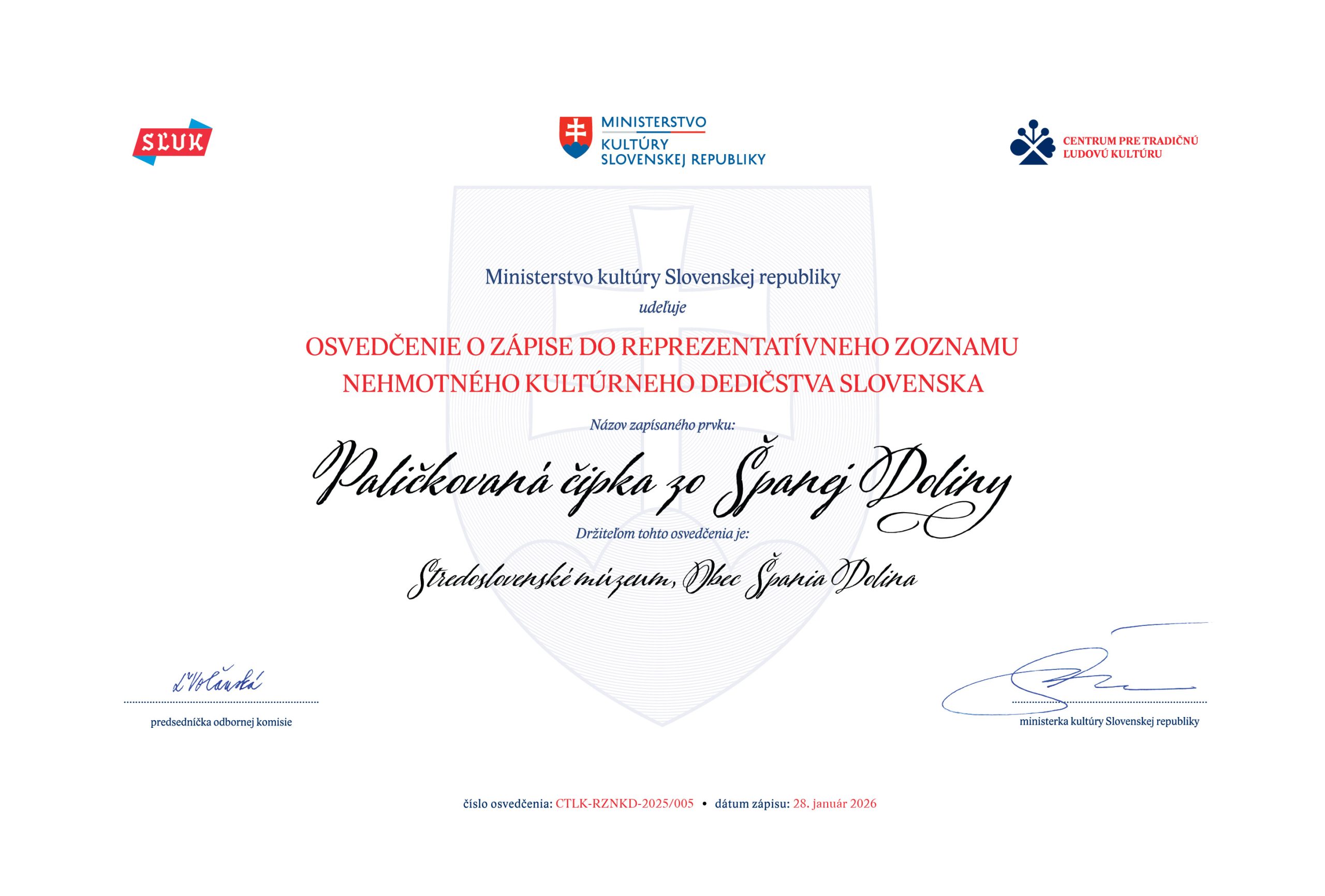
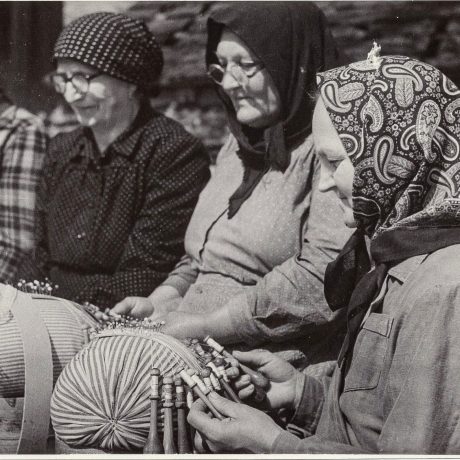
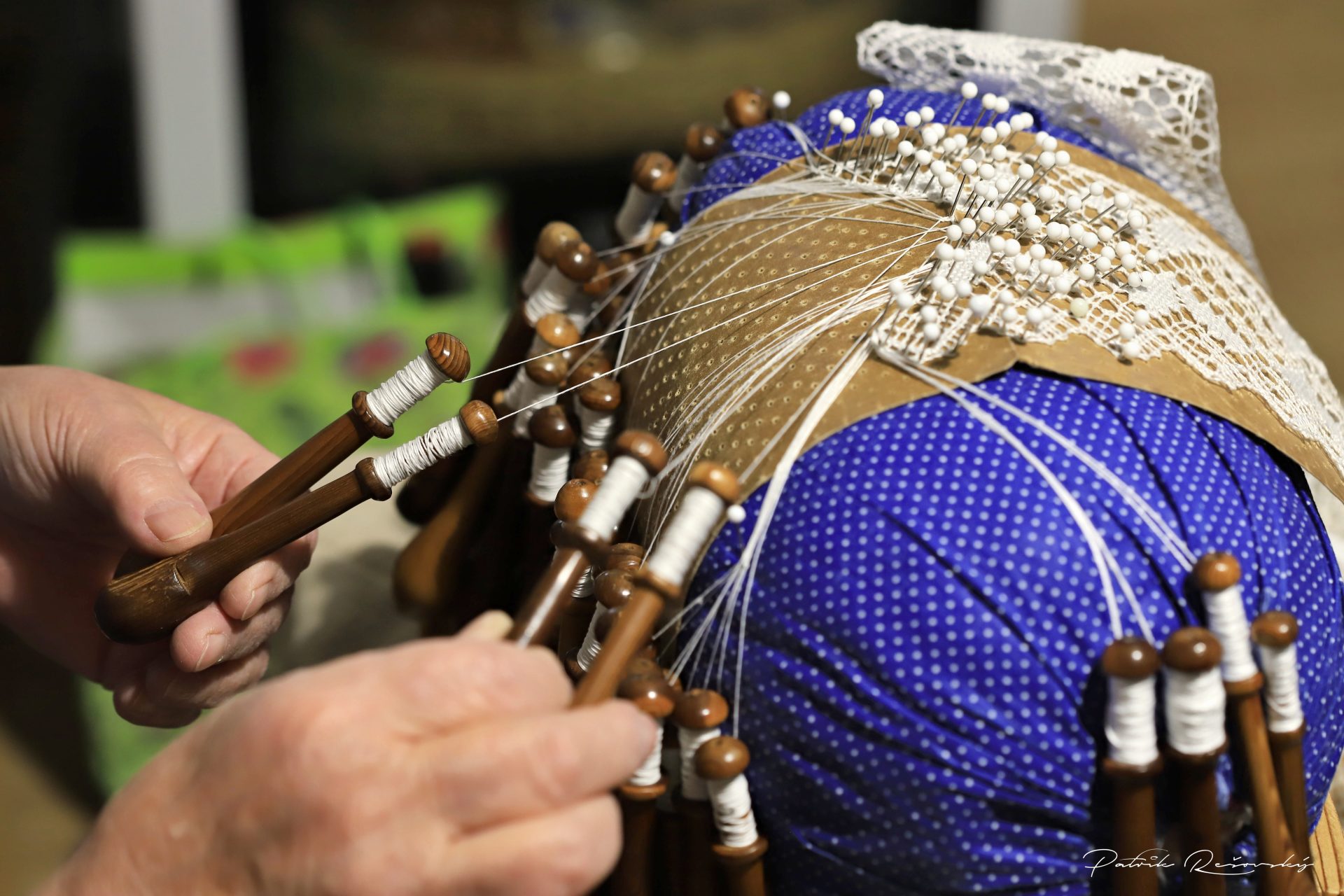
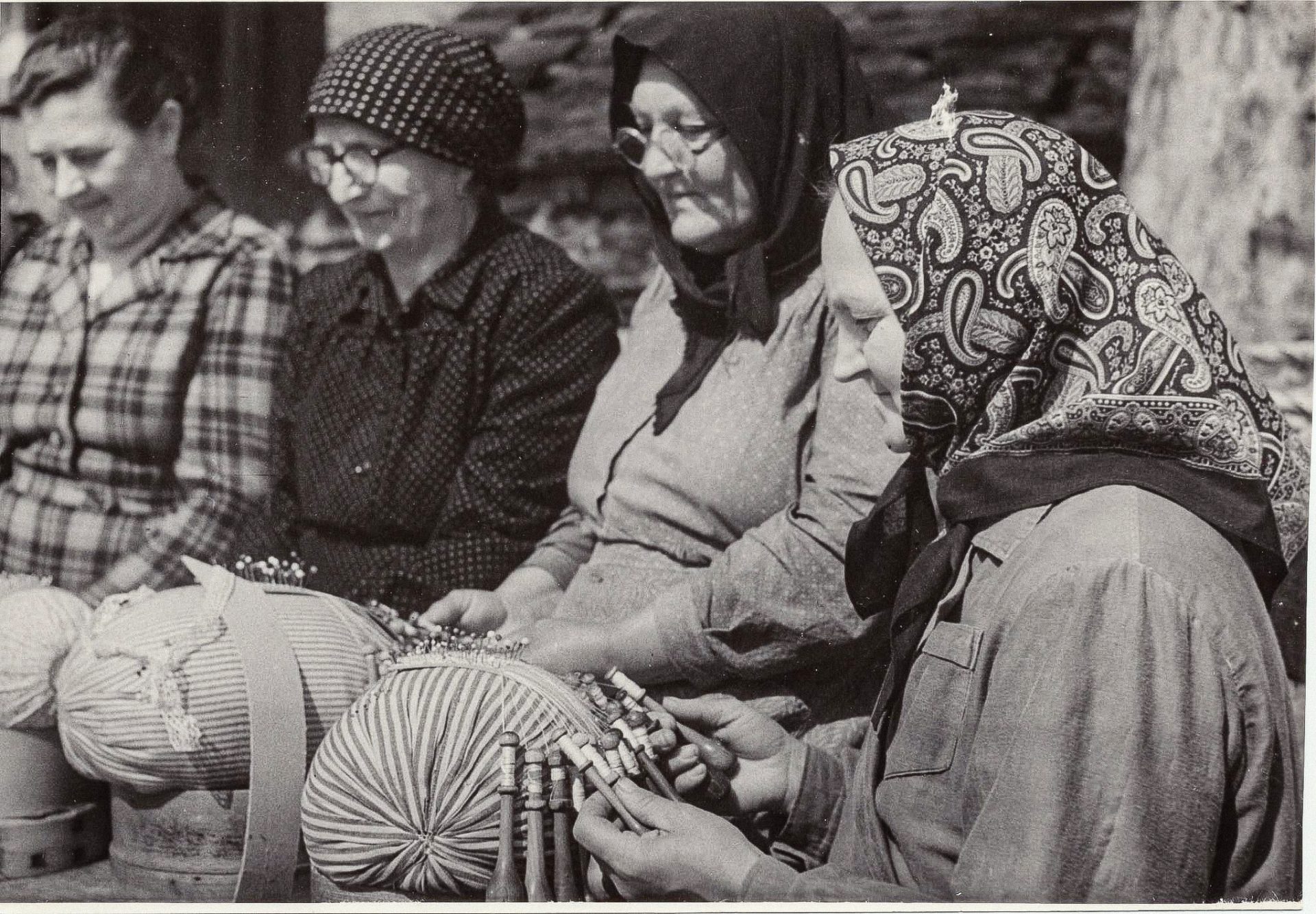
Bobbin lace-making began to spread in Slovakia in the latter half of the 16th century with the arrival of a mining population from Germany to the central Slovak mining towns. Due to the lack of agricultural land, lace production became an important additional source of livelihood for families living in settlements around the mines. This is why Špania Dolina is considered one of the most important lace-making mining centres in Slovakia. Initially, lace was produced only for the town, but it later spread to rural areas as well. Bobbin lace-making was passed down from generation to generation within families. Not only girls, but often boys also learned the craft. In fact, people of all generations practised it.
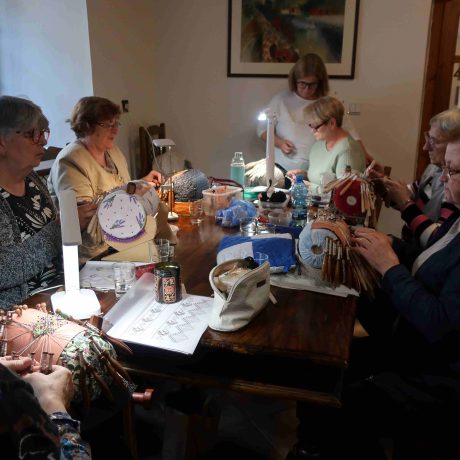
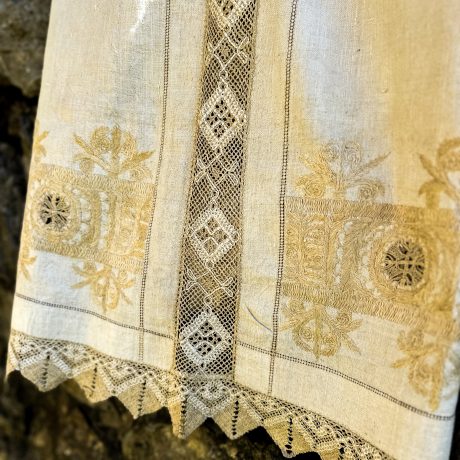
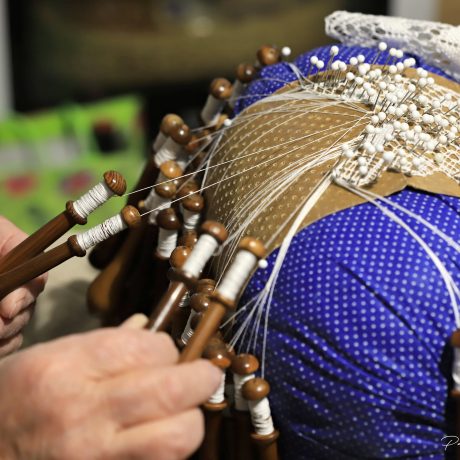
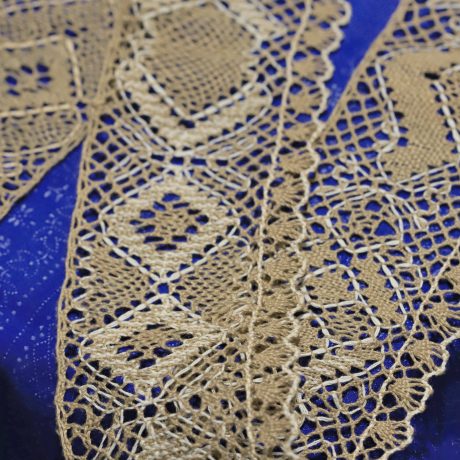
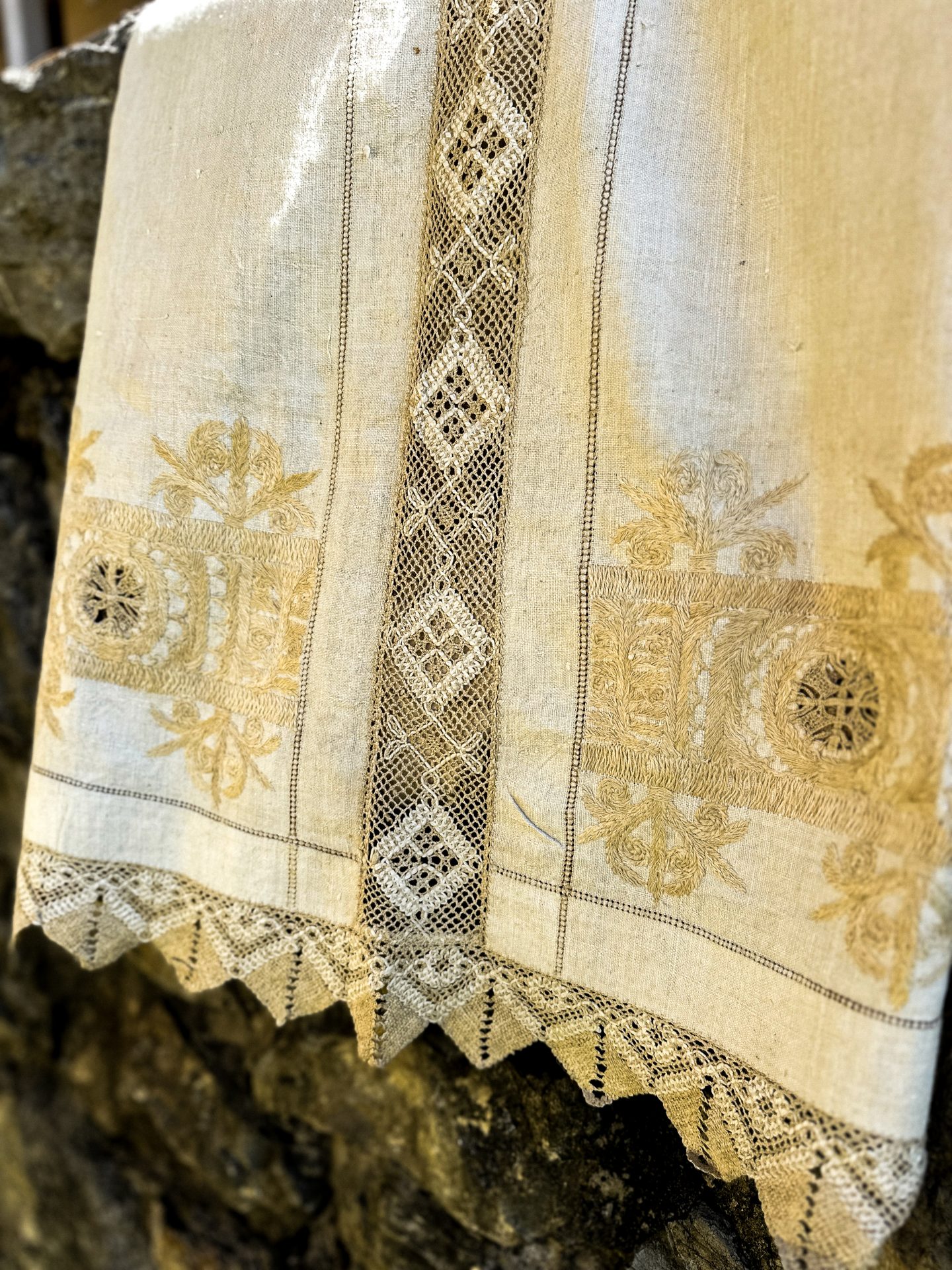
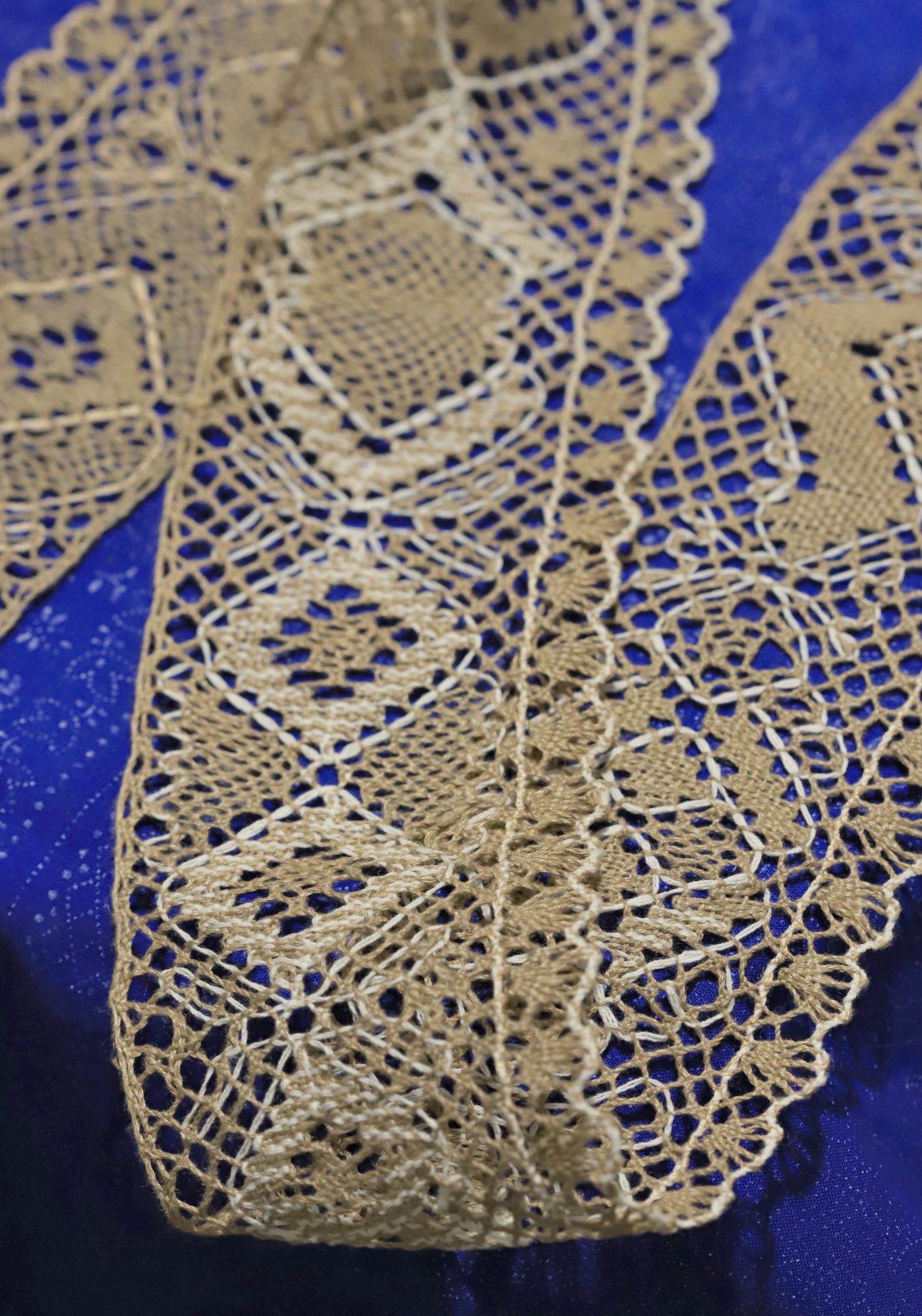
Laces from Špania Dolina are multi-pair laces. They are worked on a paper template without a pre-drawn pattern, using only a diagonal square grid as a guide. The rows are always worked diagonally from the top right down to the left. The foundation of these laces is a torchon ground (diagonal grid), featuring motifs in the shape of rectangles, squares, triangles, and hearts. These motifs are worked in cloth stitch or half stitch, along with eyelets and spiders. The contours of the motifs are highlighted by an interwoven gimp thread. When the lace serves as an insertion joining two pieces of linen, it has straight edges. Laces intended for edging feature fan-shaped scallops along one side.
The laces of Špania Dolina were made mainly from white or unbleached linen and cotton threads. Thicker cotton yarns were used to plastically accentuate the contours of ornamental motifs, often combined with a denser weave inside them.
In the second quarter of the 20th century, the colours of lace began to match those of embroidery in the regions where they were used as part of traditional folk clothing, on sleeves, caps, aprons, or men’s shirts.
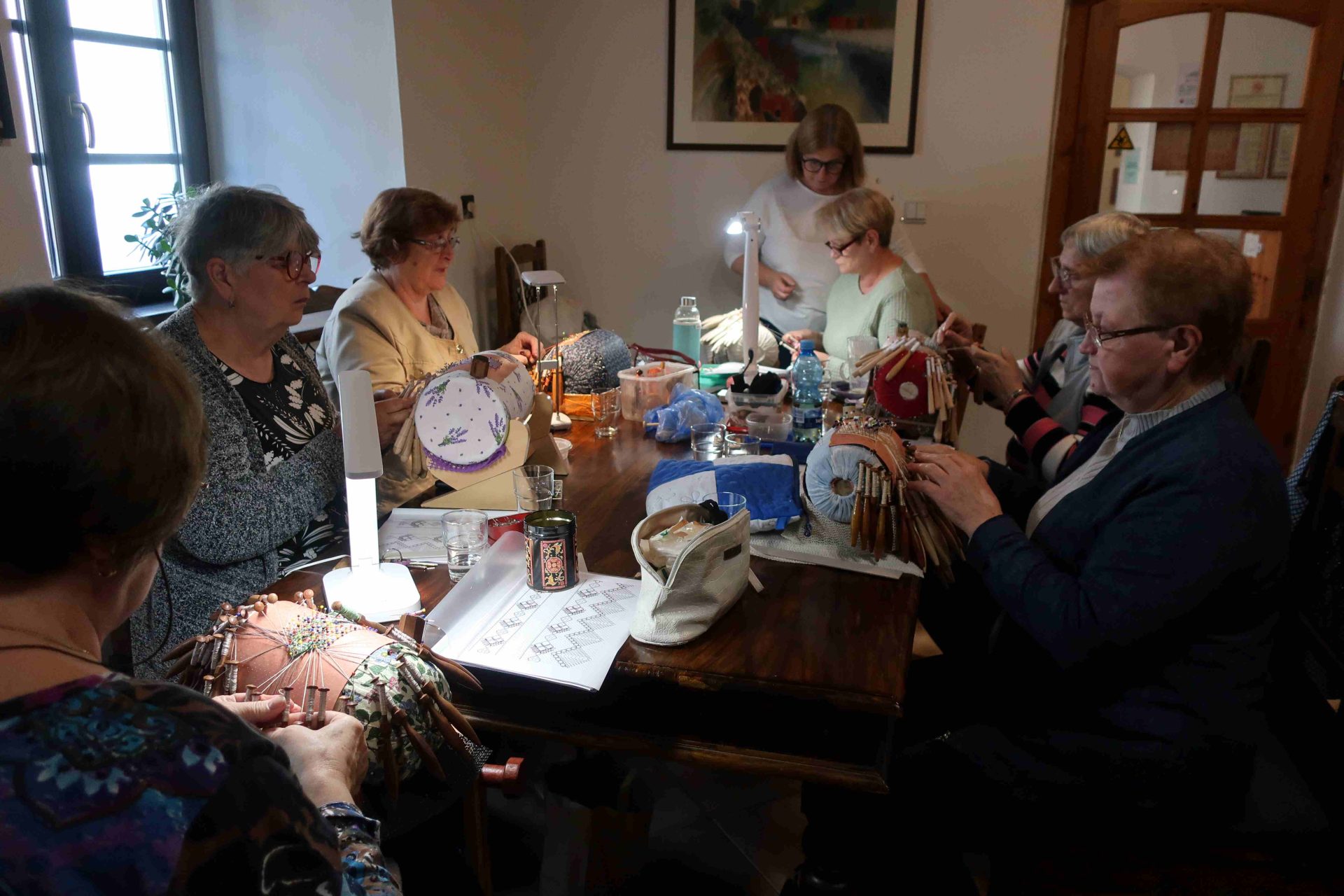
After the decline of lace production in the mid-20th century, a renewed interest in bobbin lace emerged in the 1970s, and lace from Špania Dolina began to be produced outside the region itself. Various clubs were established in places where bobbin lacemaking had not previously been practised, such as Bratislava-Petržalka, Nová Dubnica, Strážske, and Trenčín, that is, throughout Slovakia.
Today, lace has found use in home textiles as lace blankets, tablecloth edging, and lace pictures, as well as in fine and applied arts, where Slovak craftsmen and artists continue to follow traditional patterns.
The Central Slovak Museum in Banská Bystrica, the municipality of Špania Dolina, the Bobbin Lace Museum in the Klopačka building in Špania Dolina, the Central Slovak Educational Centre in Banská Bystrica, the Podpoľanie Educational Centre in Zvolen, the ÚĽUV Regional Craft Centres, and civic associations such as Pôvabnica Turca and Zvyky a tradície are involved in collecting, promotional, publishing, and exhibition activities, as well as in year-round educational programmes for children focused on lace from Špania Dolina.
Proposal by
Year of Inscription
Certificate number

Central Slovak Museum, Špania Dolina Municipality
2026
CTLK-RZNKD-2025/005